Blocked ears? Muffled hearing? Everything sounding a little too far away?
If your ears feel full, your hearing has become muffled, or your hearing aids suddenly aren’t performing as they should, ear wax build-up could be the reason.
But how do you know when you need ear wax removal, and when is it time to consider microsuction ear wax removal?
At Gatwick Audiology, we regularly help people with impacted ear wax and blocked ears. In this guide, we’ll explain the signs of ear wax build-up, what different ear wax colours can mean, how microsuction works and when you should get your ears professionally checked.
Ear wax, also known as cerumen, is completely normal and plays an important role in ear health.
Your ears naturally produce wax to help:
- Protect the skin inside the ear canal
- Trap dust and debris
- Prevent the ear canal from becoming too dry
- Help protect against bacteria
Most of the time, your ears are self-cleaning, with old wax naturally moving towards the entrance of the ear canal.
So, having ear wax doesn’t mean your ears are dirty!
The problem occurs when too much ear wax builds up and becomes impacted, blocking the ear canal and affecting your hearing.
What does the colour of your ear wax mean?
If you’ve read our popular ear wax colour guide blog, you’ll know that ear wax can come in a surprisingly wide range of colours.
It can be:
🟡 Yellow – often newer, softer ear wax
🟠 Orange – common as wax becomes older
🟤 Brown – usually older, more concentrated wax
⚫ Very dark brown or black – often older, dried-out ear wax
The colour of your ear wax isn’t usually the most important thing.
What matters more is whether the wax is causing symptoms.
For example, dark ear wax doesn’t automatically mean you have an infection or a serious problem. However, if you have ear pain, discharge, bleeding or sudden hearing loss, you should seek appropriate medical advice.
What are the symptoms of impacted ear wax?
So, how do you know if you have ear wax blockage?
Common symptoms include:
Muffled or reduced hearing
One of the most common signs of impacted ear wax is hearing that suddenly seems quieter or less clear.
You might feel as though you’re listening to the world through cotton wool — or as though your ear is underwater.
A blocked or full ear
Your ear may feel plugged, pressured or unusually full.
Some people describe it as feeling like their ear needs to “pop” but won’t.
Tinnitus or ringing in the ears
Ear wax build-up can sometimes be associated with tinnitus, including ringing, buzzing or other sounds in the ear.
Problems with hearing aids
If you wear hearing aids and suddenly notice more whistling, feedback or reduced sound quality, ear wax could be contributing to the problem.
Ear discomfort or itching
A build-up of wax can sometimes cause irritation, itching or discomfort.
If you’re experiencing these symptoms, it’s worth having your ears professionally examined rather than assuming wax is definitely the cause.
What is microsuction ear wax removal?
Microsuction is a professional method of removing ear wax using gentle suction.
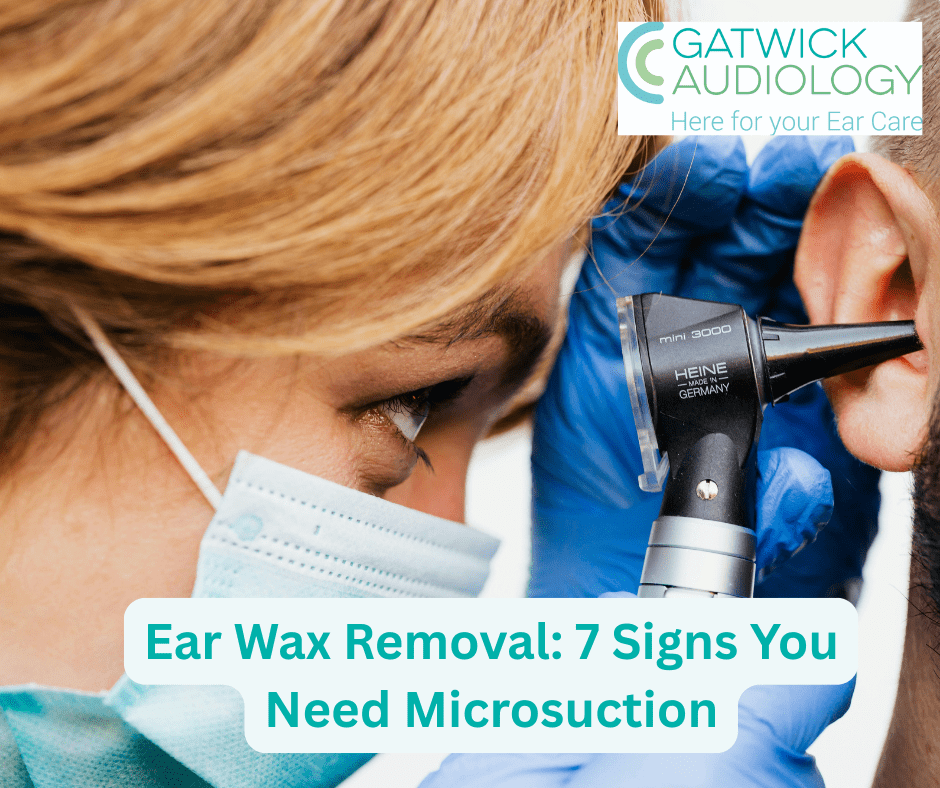
During the procedure, a trained professional uses specialised equipment to look inside the ear canal while carefully removing the wax.
One of the advantages of microsuction is that the clinician can see the ear canal and the wax throughout the procedure.
Unlike traditional ear syringing, microsuction does not involve flushing water into the ear.
For many people, professional ear wax removal using microsuction is a quick and effective way of clearing impacted wax.
And let’s be honest…
There’s something very satisfying about going from:
“Why does everything sound so quiet?”
to
“WOW. I CAN HEAR AGAIN!”
Should you use cotton buds to remove ear wax?
NO. Please don’t put cotton buds inside your ears.
Although they might seem like an obvious way to remove ear wax, cotton buds can actually push wax further into the ear canal.
They can also irritate the delicate skin inside the ear and, if inserted too far, potentially cause injury.
Your ears are designed to clean themselves.
So if your ears feel blocked, don’t go digging for the wax. Get them checked instead.
Does ear wax affect hearing aids?
It can.
If you wear hearing aids, ear wax can sometimes interfere with their performance.
You may notice:
- Increased hearing aid whistling or feedback
- A muffled or distorted sound
- Reduced volume
- Your hearing aids seeming less effective
- Wax collecting around the hearing aid or earmould
If your hearing aids suddenly aren’t working as well as usual, don’t immediately assume there’s a fault with the device.
Ear wax could be the problem.
A professional ear examination can help establish whether wax is affecting your hearing or hearing aids.
How often should you have ear wax removed?
There’s no set schedule for ear wax removal.
If your ears are healthy and you’re not experiencing symptoms, you may not need your ear wax removed at all.
Some people naturally produce more ear wax than others and are prone to repeated blockages. People who use hearing aids can also experience recurring wax build-up.
If you regularly suffer from impacted ear wax, your audiologist can advise you on appropriate ear care and whether regular professional ear wax removal may be beneficial.
When should you get your ears microsuctioned?
You may want to consider microsuction ear wax removal if:
- Your ears feel blocked
- Your hearing has become muffled
- You have a noticeable build-up of ear wax
- Your hearing aids are whistling or not performing normally
- You have a feeling of fullness in your ear
- You are experiencing symptoms that may be caused by impacted wax
However, it’s important to have your ears assessed first.
Not every hearing problem is caused by ear wax.
Sudden hearing loss, significant ear pain, discharge, bleeding, dizziness or other unusual symptoms should be assessed appropriately rather than simply treated as a wax blockage.
Do you need to soften your ear wax before microsuction?
Depending on your individual circumstances, you may be advised to use suitable ear wax softening drops before your appointment.
Softening the wax can sometimes make it easier to remove.
However, you shouldn’t put anything into your ears if you have been advised against it or if you have concerns about your eardrum or previous ear surgery.
If you’re unsure, speak to a qualified professional first.
Professional ear wax removal in Surrey & Sussex
If you think ear wax is affecting your hearing, there’s no need to put up with blocked ears.
At Gatwick Audiology, we can examine your ears, assess whether ear wax is causing your symptoms and advise whether microsuction ear wax removal is suitable.
Whether you’re dealing with blocked ears, muffled hearing or hearing aid problems, getting your ears checked can help you understand what’s really going on.
Ear wax is normal. Blocked ears don’t have to be.
If your ears feel blocked or your hearing has changed, don’t dig, don’t guess and don’t ignore it. Get your ears professionally checked.
Contact Gatwick Audiology to find out more about ear wax removal and microsuction.
Frequently Asked Questions About Ear Wax Removal
How do I know if I need ear wax removal?
If you have muffled hearing, blocked or full ears, tinnitus, discomfort or hearing aid problems, impacted ear wax could be responsible. A professional ear examination can determine whether wax needs removing.
Is microsuction safe?
Microsuction is a professional ear wax removal technique performed using specialised equipment and direct visual guidance. Your clinician will assess your ears first to determine whether microsuction is appropriate.
Is microsuction better than ear syringing?
Microsuction and other ear wax removal methods have different advantages and aren’t suitable for everyone. Microsuction allows the clinician to see the ear canal while removing wax without using water. Your audiologist can advise on the most appropriate approach.
Can ear wax cause hearing loss?
Impacted ear wax can cause temporary conductive hearing loss by blocking the ear canal. However, hearing loss can have many causes, so persistent or sudden hearing changes should be professionally assessed.
Can I remove ear wax myself?
It’s best to avoid inserting cotton buds or other objects into your ear canal. If you think you have impacted ear wax, professional assessment is the safest way to establish whether removal is necessary.
How often should I have my ears microsuctioned?
There is no standard frequency. Some people rarely need ear wax removal, while others are prone to recurring build-up. Your audiologist can advise based on your individual needs.
Contact us to book a Microsuction Ear Wax Removal appointment today on 0333 011 7717 or email us at hello@gatwickaudiology.co.uk or you can book here on our website.